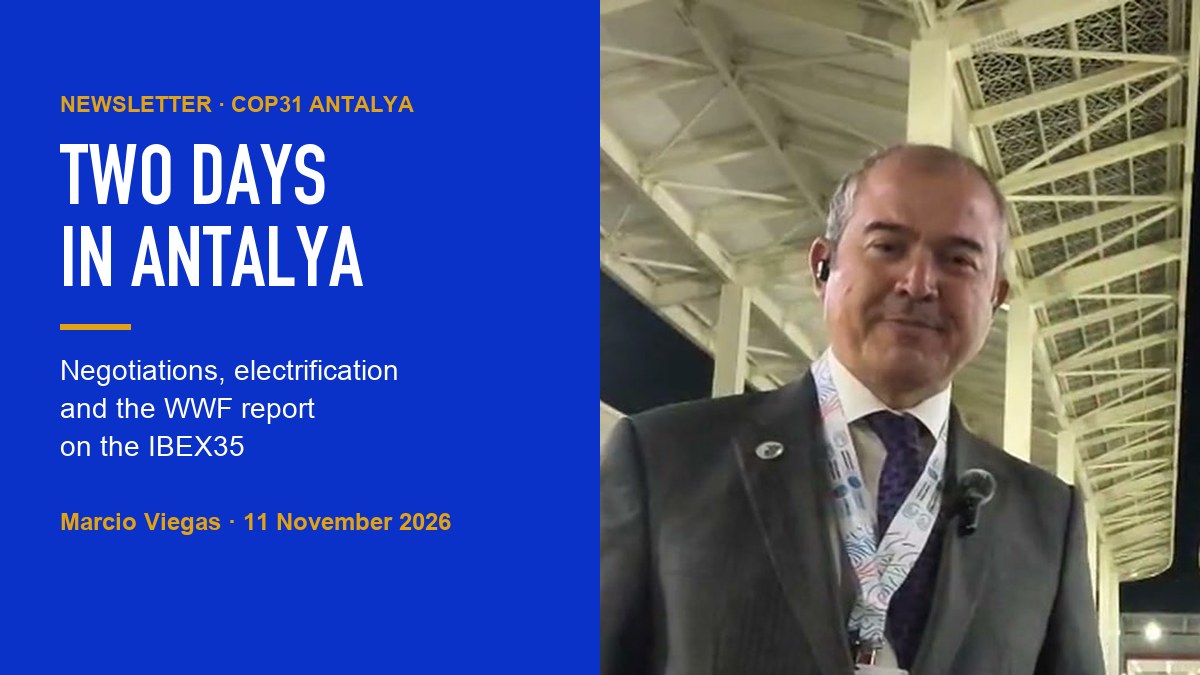
- SUST4IN brought experts together at "COP31 Antalya: The Day After", a fully booked event at the Madrid International Lab.
- COP31 ended without a political decision, almost 50 hours after its official close. It was the longest climate summit in history and the first since Copenhagen, in 2009, in which the plenary rejected the main political text.
- The European Union (with Spain), the United Kingdom and Panama, among others, rejected a text that did not name fossil fuels. Some 130 countries had backed an EU bridging proposal. The UAE Consensus remains the latest collective position.
- Marcio Viegas, founder of SUST4IN: "We expected more from Antalya, but no deal is better than a bad deal".
- Helena Viñes, Chair of the EU Platform on Sustainable Finance and Commissioner at the CNMV, argued that "the energy transition is now economic policy more than climate policy".
- The Embassy of Türkiye, the host country, opened the event. Elena Pita, Director General of the Spanish Climate Change Office, closed it by explaining why the European Union rejected a decision lacking the ambition that overshooting 1.5 °C demands.
Madrid, 24 November 2026. Representatives of business, finance, civil society, science and youth met on Monday at "COP31 Antalya: The Day After", organised by SUST4IN at the Madrid International Lab, to analyse the outcome of COP31, presided over by Türkiye with Australia leading the negotiations. The summit ended on Sunday without an overall political decision. It is not the first time: there was none in Baku (2024), Nairobi (2006) or Milan (2003) either. The difference is that in Antalya, for the first time since Copenhagen (2009), the plenary rejected the proposed text. However, technical decisions were adopted, such as those on just transition and carbon markets (Article 6); the full list is at the end of this report. The next milestones are Bonn, in June 2027, and COP32 in Addis Ababa, in November.
The prevailing conclusion was that, without a political agreement, the transition keeps moving forward, driven by the real economy, financial regulation, the law and alliances between countries and companies. The event continued the pioneering, multi-sector series that SUST4IN has organised since COP21 in Paris, in 2015, and was fully booked despite the setback in Antalya.
Context: the first COP of the overshoot, with no agreement
Marcio Viegas, Founder and Managing Director of SUST4IN, opened the event by setting the context: "We are overshooting the 1.5 °C limit. In Europe, this summer’s heat caused some 50,000 deaths. In Nepal, a flood triggered by a glacier collapse left more than 1,400 dead and more than 5,000 missing in August. With the Strait of Hormuz crisis, diesel exceeded 200 dollars a barrel in September. And in Shenzhen, Xi Jinping, Vladimir Putin and Donald Trump signed a declaration that promises to increase the production of refined oil products, in which the word climate does not appear". On the summit, he said: "Despite the enormous efforts of the Turkish and Australian presidencies, COP31 has ended without an ‘Antalya Agreement’. But the Paris Agreement and the transition away from fossil fuels agreed in Dubai remain in force; without them, we would be in an even worse crisis. Decision by consensus is a diabolical formula but, as Simon Stiell, Executive Secretary of UN Climate Change, reminded us, it is the process we have and it can work".
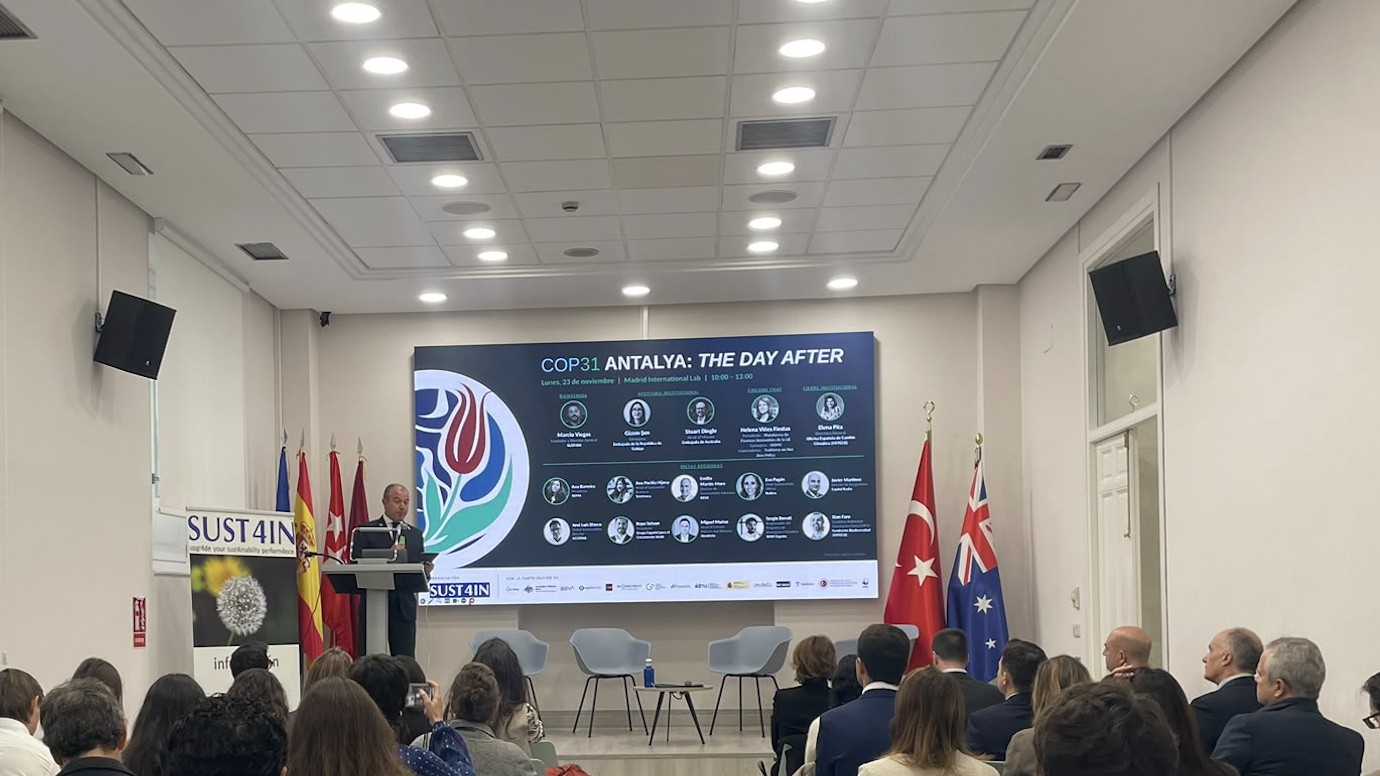
Marcio Viegas, welcome address.
The institutional opening was given by Gizem Şen, Counsellor at the Embassy of the Republic of Türkiye in Madrid, who reviewed the work carried out at COP31 in Antalya, highlighting the principles of dialogue, consensus and action that guided the Turkish Presidency and the progress made under the Action Agenda.
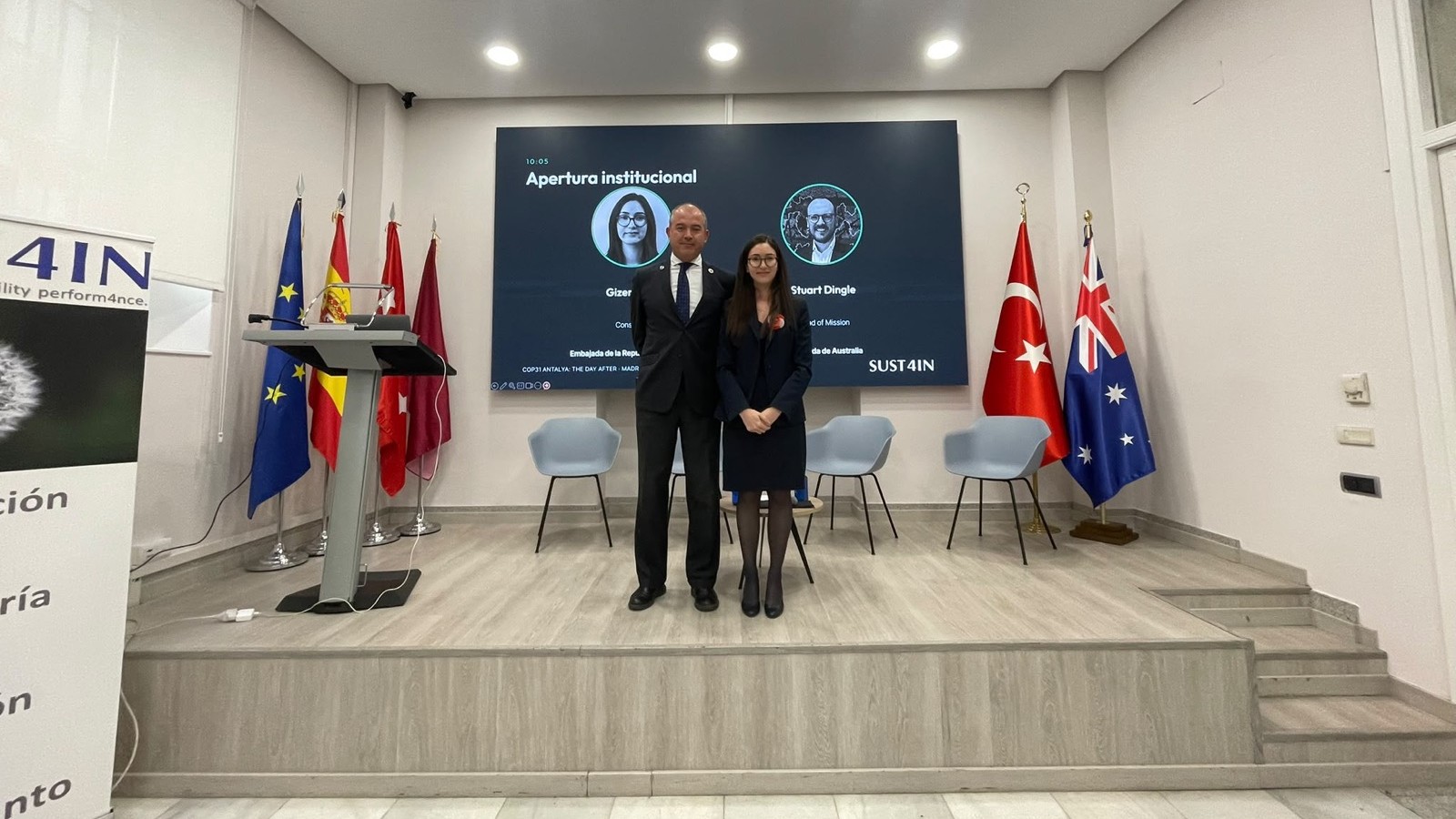
Institutional opening.
Helena Viñes Fiestas, Chair of the EU Platform on Sustainable Finance, Commissioner at the CNMV and Co-Chair of the Taskforce on Net Zero Policy, spoke with Marcio Viegas in a fireside chat. She presented the Taskforce’s report for COP31, Policy Matters: Charting a Path to Net Zero, and the Platform’s Monitoring of Capital Flows to Sustainable Investments, and said: "The energy transition has ceased to be a climate policy and has become economic policy. And economic reality points in only one direction". She added: "Despite political polarisation and the offensive of fossil interests, the data are unequivocal: the transition is advancing, driven by economic reality. Since 2015, regulation focused on the transition of companies and financial institutions has been strengthened in 16 of the 20 G20 economies, and capital is flowing towards decarbonisation activities. In Europe alone, the largest companies have invested more than 1.2 trillion euros since 2022 in mitigation activities aligned with the EU Taxonomy; cumulative green bond issuance reached 2.35 trillion euros in June 2026; and the evidence suggests that companies that disclose transition plans benefit from lower financing costs".
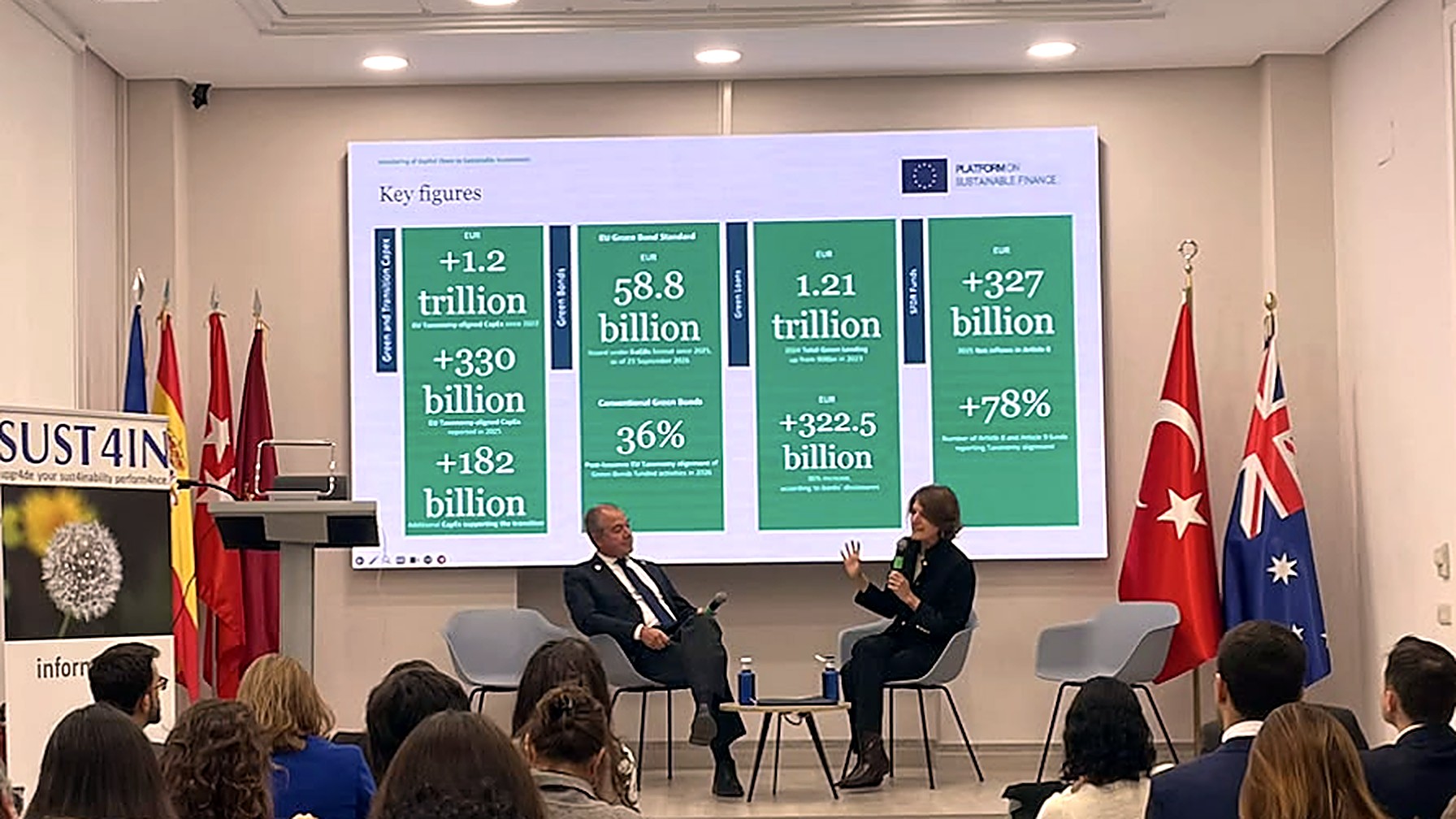
Fireside chat with Helena Viñes Fiestas.
Business and finance: grids and investment to electrify
The first panel, moderated by Kepa Solaun, Chair of the Spanish Green Growth Group (GECV), analysed the implications of COP31 for business and the financial sector. Ana Pociña Hijosa, Head of Sustainable Business at Telefónica, said: "COP31 leaves us with insufficient progress, but at Telefónica we are clear about the way forward. 93% of the electricity we consume globally comes from renewable sources. This commitment, together with energy efficiency, allows us to reduce the environmental impact of our technology and so make the most of connectivity and artificial intelligence to help decarbonise other sectors". Emilio Martín-More, Director of Sustainability Advocacy at BBVA, explained: "To turn ambition into action we need the right mechanisms so that countries’ projects become real investment opportunities, and this is especially important in emerging economies". Eva Pagán, Chief Sustainability Officer at Redeia, stressed: "35 by 35 is not only an electrification target. It is also a grid target. Without grids there will be no electrification". José Luis Blasco, Global Sustainability Director at ACCIONA, noted: "The differences from the disagreements at COP6 or Copenhagen are significant: the main one is that back then, sustained emission reductions depended largely on raising political ambition. Today a powerful economic logic has been added. Renewables and electrification have gone from being climate policy instruments to also becoming drivers of competitiveness, energy security and industrial policy. Diplomacy is still necessary, but it is no longer the only engine of the transition". He added: "Electrifying is increasingly competitive and failing to adapt is increasingly expensive. Those two economic facts will move the climate agenda forward, even if international political consensus advances more slowly, turning the transition into what it really is: a huge agenda of investment opportunities in energy and infrastructure". Solaun closed the panel: "The success of a COP is not measured only by the agreements reached during the summit, but by the decisions that governments, companies and investors take when they return home".
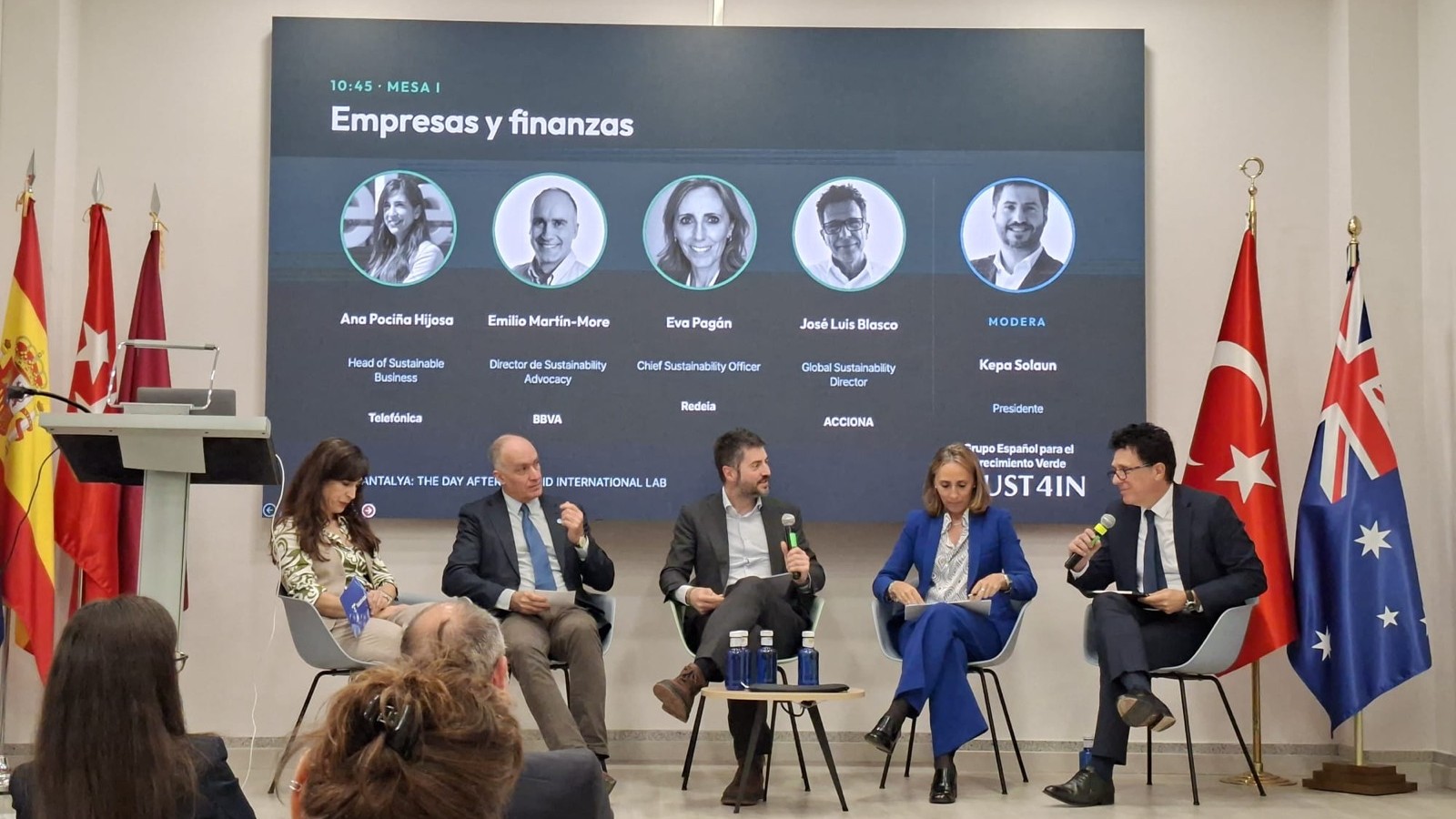
Panel I: Business and finance.
Civil society, science and youth: climate action cannot be left to the COPs alone
The second panel, moderated by Javier Martínez, Director of Ecogestiona on Capital Radio, addressed the role of the law, civil society, science and young people. Ana Barreira, President of the International Institute for Law and the Environment (IIDMA), said: "At COP31 the consensus rule made it impossible to adopt a decision mentioning fossil fuels and electrification and finance targets. A possible reform of the process needs to be examined". Miguel Muñoz, Head of Climate Policies and Alliances at Iberdrola, added: "Electrification has emerged strengthened as the focus of action in the face of the challenges of the global agenda, despite the results of COP31". Sergio Bonati, Head of the Climate Emergency Programme at WWF Spain, presented the report "Leading the transition", which gives the transition plans of IBEX 35 companies an average of 81 out of 100 for disclosure and 67 for ambition and credibility, and warned: "COP31 closes with an outcome that falls short of the climate emergency. Ignoring fossil fuels, the main cause of climate change, is a step backwards. Nature is gaining prominence, but without greater climate ambition there will be no real progress". Xian Faro, environmental scientist with Generación Clima COP31 (Fundación Biodiversidad, MITECO), brought the perspective of young people: "All it takes for evil to triumph is for good to do nothing. So when those who should act do not do enough, all that is left is for us to keep acting". He called for being "patient with results, but impatient with action". Martínez closed the panel: "Despite the political deadlock at the COP, the economy keeps moving towards decarbonisation".
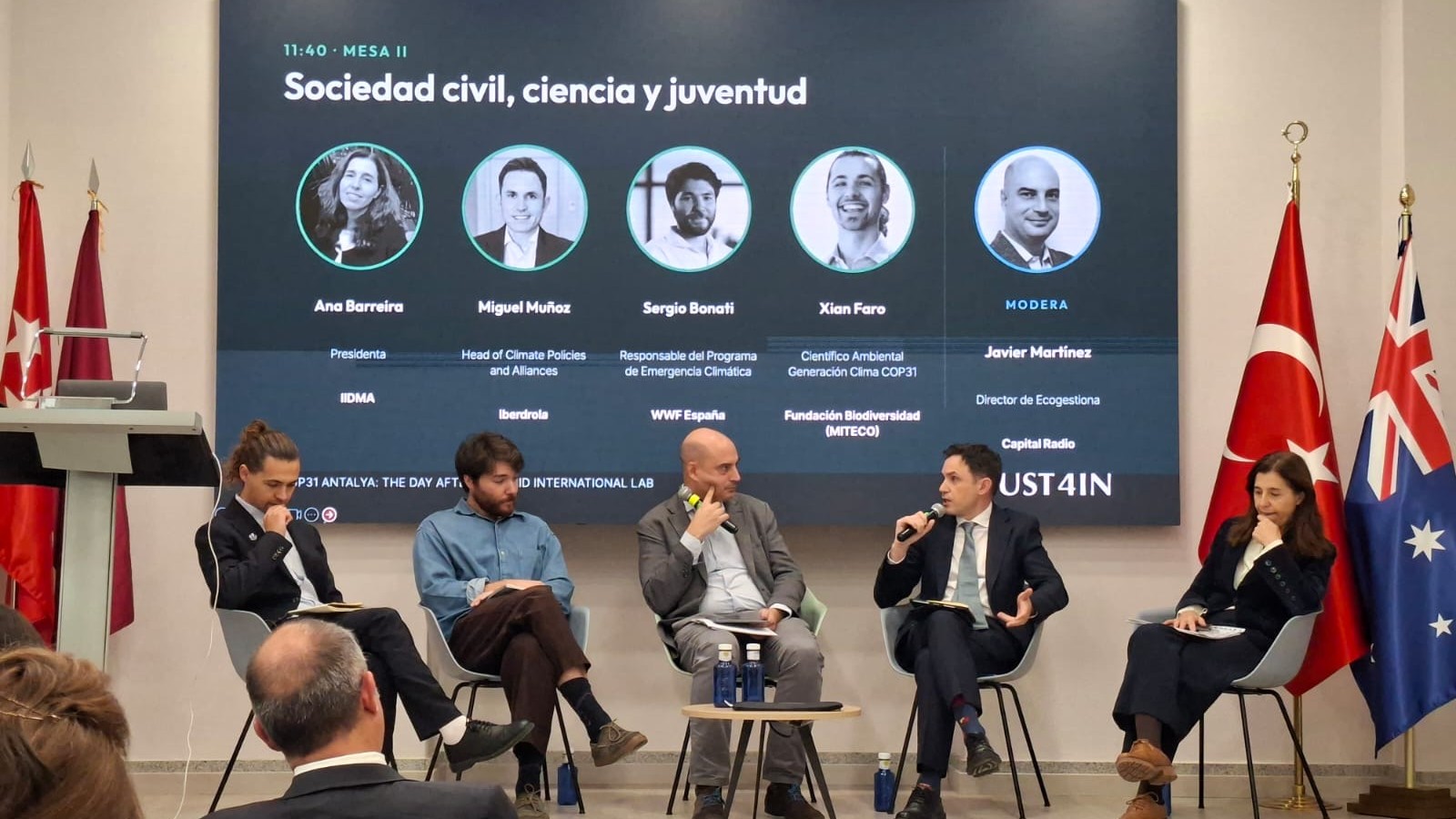
Panel II: Civil society, science and youth.
Institutional closing: the European position
In the institutional closing, Elena Pita, Director General of the Spanish Climate Change Office (MITECO), spoke in a video recorded in Antalya and explained the European position: "For the European Union, the decision was not ambitious enough. The solution we already agreed in Dubai, centred on the gradual phase-out of fossil fuels, was not explicitly mentioned". She criticised the text for treating "renewables-based electrification almost on an equal footing with other technologies, such as storage and CO2 capture, which are much less mature technologies and should only be used when emissions cannot be abated with other technologies". She concluded: "Very often, to defend multilateralism, you have to stand up to those who want to undermine ambition".

Video: Elena Pita from Antalya (4:48, in Spanish)
Conclusions: see you in Addis Ababa
In the conclusions, Viegas recalled that "the climate crisis is already here and the use of fossil fuels keeps rising. The consensus rule has to change. But climate action continues, as we have seen, in the financial and business sectors, in alliances such as the Antalya AI Pledge and the Seizing the Electric Advantage statement, which we have signed, and in civil society". He added: "We expected more from Antalya, but no deal is better than a bad deal". Finally, he said goodbye: "We will continue with The Day After series. See you at COP32 in Addis Ababa and in everyday climate action".
The decisions Antalya did adopt
Without a cover decision, COP31 closed with a series of technical decisions of the Conference of the Parties (COP), the meeting of the Parties to the Kyoto Protocol (CMP) and the meeting of the Parties to the Paris Agreement (CMA). The agenda item is shown in brackets.
Carbon markets (Article 6)
- Implementation of the guidance on cooperative approaches under Article 6.2 (CMA 16a)
- Further guidance on the Article 6.4 mechanism (CMA 16b)
- Work programme on non-market approaches under Article 6.8 (CMA 16c)
Just transition, adaptation and global stocktake
- United Arab Emirates just transition work programme (CMA 5)
- Global goal on adaptation (CMA 9a)
- Adaptation Fund (CMP 6/CMA 11e)
- Report on the annual global stocktake dialogue (paragraph 187 of decision 1/CMA.5) (CMA 4)
Finance
- Long-term climate finance (COP 8a)
- Standing Committee on Finance (COP 8b/CMA 11a and CMA 11f)
- Report of the Green Climate Fund and guidance to the Fund (COP 8c/CMA 11b and CMA 11g)
- Report of the Fund for responding to Loss and Damage and guidance to the Fund (COP 8e/CMA 11d)
- Implementation of Article 2.1(c) of the Paris Agreement and its complementarity with Article 9 (CMA 11f)
- Work programme on climate finance, including Article 9.1 of the Paris Agreement (CMA 11g)
Technology
- Linkages between the Technology Mechanism and the Financial Mechanism (COP 3b)
- Development and transfer of technologies through the Technology Mechanism (COP 9a/CMA 12a)
- Host of the Climate Technology Centre (COP 9b/CMA 12b)
Administrative matters
- Administrative, financial and institutional matters (COP 17a/CMP 10)
Source: UN Climate Change, COP, CMP and CMA decisions.
Responsible AI: Generative artificial intelligence tools (Claude) were used to support the research, structuring, preliminary drafting, translation and synthesis of this article. All final content has been reviewed, adapted and validated by the SUST4IN team, which takes editorial responsibility for its accuracy and relevance.
Frequently asked questions
How did COP31 in Antalya end?
Without an overall political decision, almost 50 hours after the official close. It was the longest climate summit in history and the first since Copenhagen, in 2009, in which the plenary rejected the main political text.
Why was the COP31 political text rejected?
The European Union (with Spain), the United Kingdom and Panama, among others, rejected a text that did not name fossil fuels. Some 130 countries had backed an EU bridging proposal. The UAE Consensus remains the latest collective position.
What was adopted in Antalya?
Technical decisions of the COP, the CMP and the CMA: carbon markets (Articles 6.2, 6.4 and 6.8), the United Arab Emirates just transition work programme, the global goal on adaptation, the Adaptation Fund, climate finance (Standing Committee on Finance, Green Climate Fund, Fund for responding to Loss and Damage, Articles 2.1(c) and 9.1), technology and administrative matters. The Paris Agreement and the UAE Consensus remain in force.
What is the position of the European Union and Spain after COP31?
According to Elena Pita, Director General of the Spanish Climate Change Office: "For the European Union, the decision was not ambitious enough. The solution we already agreed in Dubai, centred on the gradual phase-out of fossil fuels, was not explicitly mentioned".
What did Helena Viñes say about the transition after COP31?
Helena Viñes Fiestas, Chair of the EU Platform on Sustainable Finance and Commissioner at the CNMV, said: "The energy transition has ceased to be a climate policy and has become economic policy. And economic reality points in only one direction". She noted that the largest European companies have invested more than 1.2 trillion euros since 2022 in mitigation activities aligned with the EU Taxonomy and that cumulative green bond issuance reached 2.35 trillion euros in June 2026.
What was the conclusion of COP31 Antalya: The Day After?
That, without a political agreement, the transition keeps moving forward, driven by the real economy, financial regulation, the law and alliances between countries and companies.
Who took part in COP31 Antalya: The Day After?
Gizem Şen (Embassy of Türkiye), Helena Viñes Fiestas (EU Platform on Sustainable Finance and CNMV), Kepa Solaun (GECV), Ana Pociña Hijosa (Telefónica), Emilio Martín-More (BBVA), Eva Pagán (Redeia), José Luis Blasco (ACCIONA), Javier Martínez (Capital Radio), Ana Barreira (IIDMA), Miguel Muñoz (Iberdrola), Sergio Bonati (WWF Spain), Xian Faro (Generación Clima COP31, Fundación Biodiversidad) and Elena Pita (Spanish Climate Change Office), with Marcio Viegas (SUST4IN).
What are the next milestones in the climate negotiations?
Bonn, in June 2027, and COP32 in Addis Ababa, in November 2027.
Who organises it?
SUST4IN, which has organised the "The Day After" series on climate summits since COP21 in Paris, in 2015.